

Dr. James Rakocy
As a young high school student, Rakocy was inspired by Leonard Pampel, the first person known to have used plants to treat wastewater. Pampel’s experiment was conducted in the aviary building at the Milwaukee County Zoo. Later, after obtaining a PhD in aquaculture from Auburn University, Rakocy led the Aquaculture Program at the Agricultural Experiment Station in developing commercially feasible systems for tilapia production.
Because fresh water is limited in the Virgin Islands, the team developed intensive production systems that conserved and reused water. They successfully developed cage, aquaponic and biofloc systems.
What he did
In the 1970s, his doctorate focused on cultivating plants with fish. He created an ecosystem where nutrients from the fish fertilized the plants and the plants absorbed nitrogen and phosphorus from fish excretions, keeping the water clear.
In the 1980s, he and his team built an aquaponic system at the University of the Virgin Islands. Over the next 30 years they perfected it and demonstrated its economic viability. The UVI system became one of the first commercially viable aquaponic systems.
What conclusions did he reach?
His system allowed regular harvests of fish and plants without water exchange for long periods and with only small amounts of supplementary potassium, iron and calcium, while maintaining a pH around 7.0. Tilapia proved to be an ideal fish.
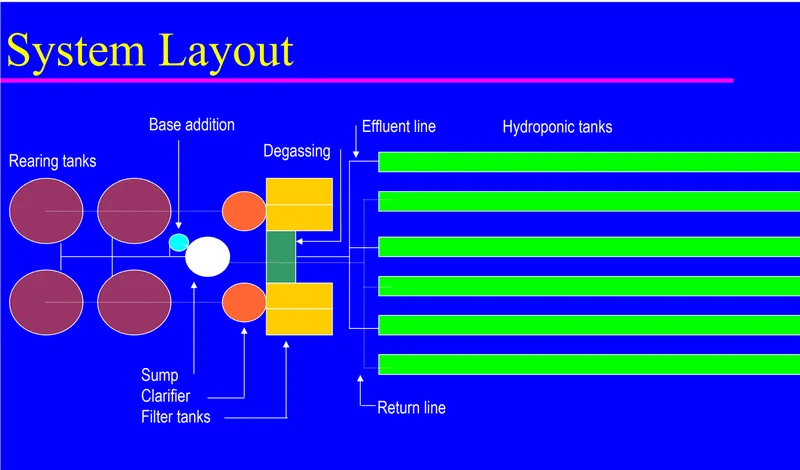
He used a conical clarifier to settle solid waste, fine bird netting to control suspended solids and dissolved nutrients, and later replaced gravel beds with floating rafts known as DWC, or Deep Water Culture. The biofilter supported bacterial decomposition and mineralization while helping regulate water quality.
He also determined that daily water replacement could be limited to around one percent of the total, that aquaponic plants are more pest-resistant than hydroponic plants, and that multiple systems improve biosecurity for commercial production.
The project
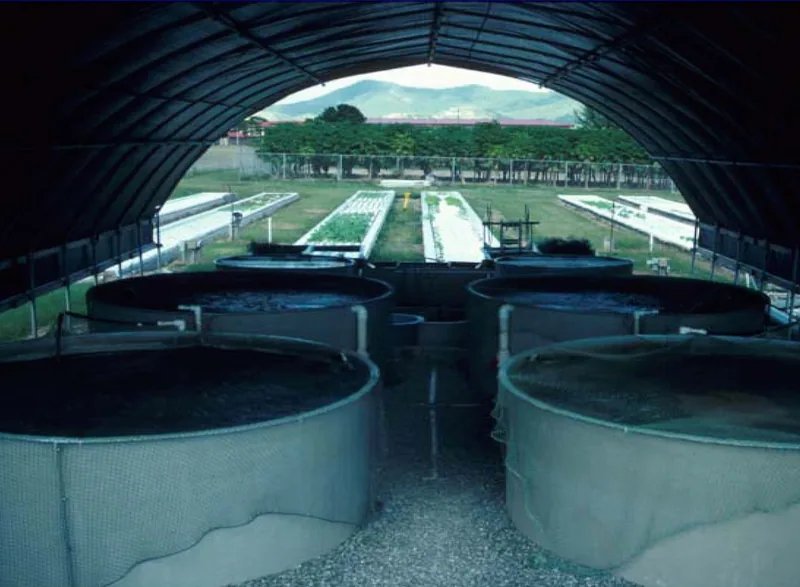
The system consisted of gravel beds where plants grew, a conical filter settling tank for larger solid waste, and a separate fish tank. The gravel beds were later replaced by floating rafts. Thin plastic bird netting collected suspended solids and prevented them from settling in the growing beds, where they could cause denitrification and remove the nitrate plants need.
Conclusion
In Dr. Rakocy’s opinion, commercially viable aquaponic operations succeed when they are large, close to a market, use lettuce and other green leafy vegetables, and add value through products such as cut and bagged produce. He predicted a bright future for aquaponics as new species, designs and locally available materials continue to be explored.