
A classroom that grows with its learners
Aquaponics brings living things and designed systems into the same learning space. Students can follow how water circulates between fish and plants, notice what changes, and discuss how the parts depend on one another.
STEM in a living system
Aquaponics can connect several areas of learning through one practical project:
- Life science: observe plant growth, animal needs and the relationships within a living system.
- Engineering: plan, build and improve structures that support water movement and plant growth.
- Maths and evidence: measure, record and compare changes over time.
- Sustainability: discuss water use, food production, materials and the choices behind a system’s design.
The emphasis is on asking useful questions, keeping observations and learning from the results—not on expecting every classroom to use the same design or reach the same outcome.
Learning by making and noticing
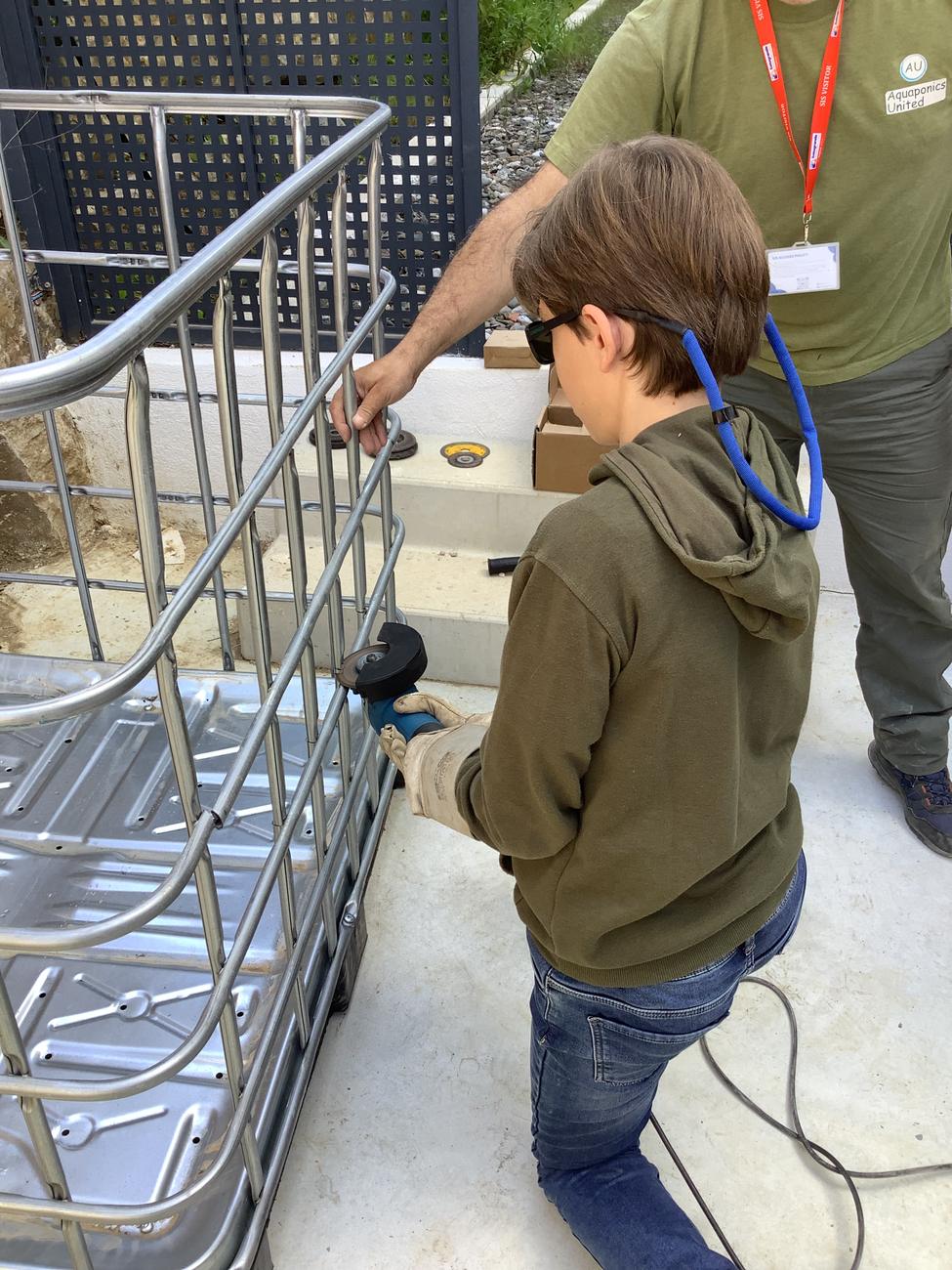
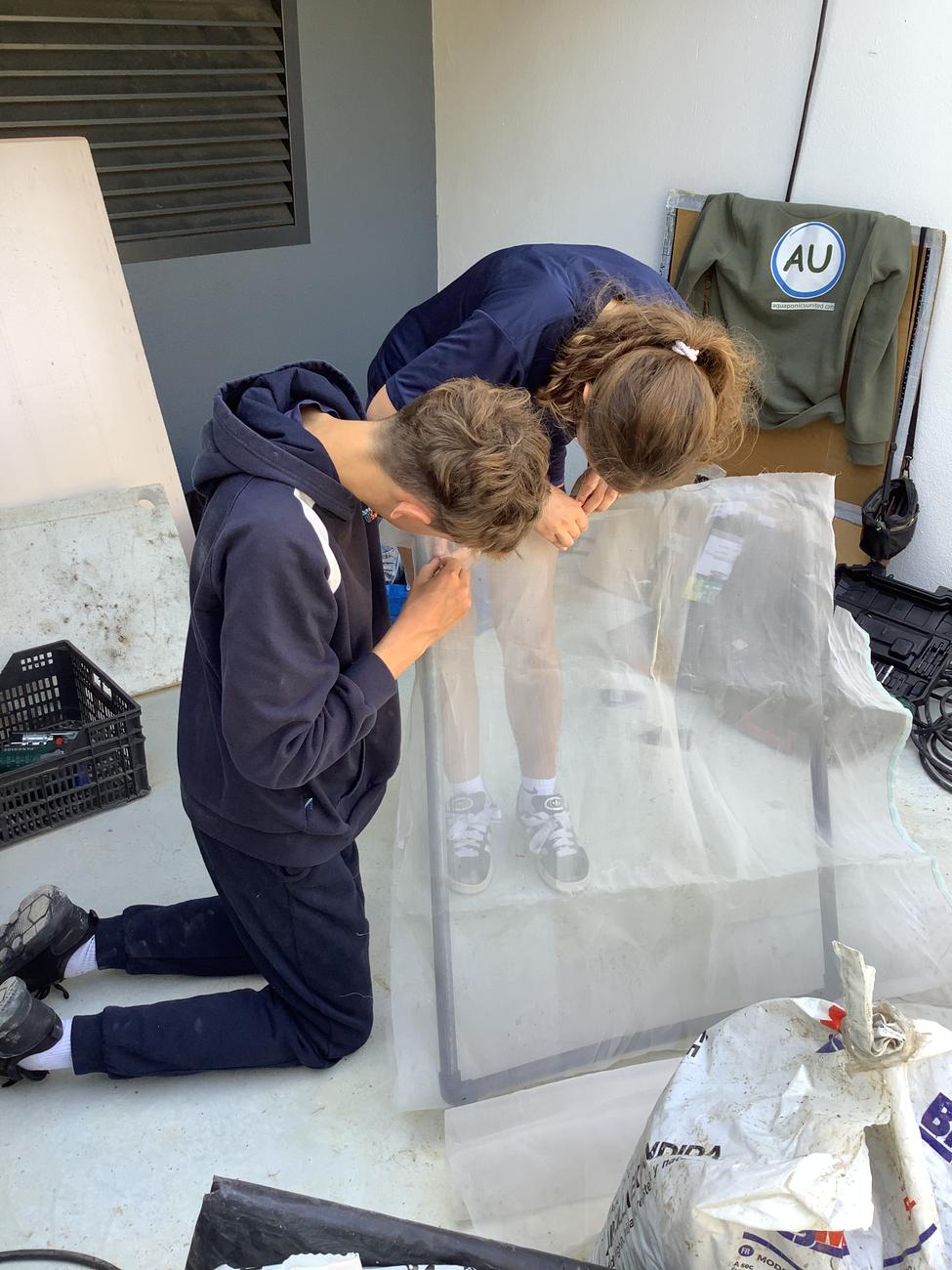
These photographs show students taking part in practical construction and close observation, with guidance. Building and inspecting a system gives learners a chance to connect ideas with real materials, work together and see how careful design supports living things.
Adaptable, hands-on learning
Every school and community has different space, materials, time and experience. An educational aquaponics project can begin with the resources available and develop at a manageable pace, with attention to safe construction, animal care and regular system observation.
Aquaponics United supports practical learning that helps educators and communities explore sustainable food systems together.